


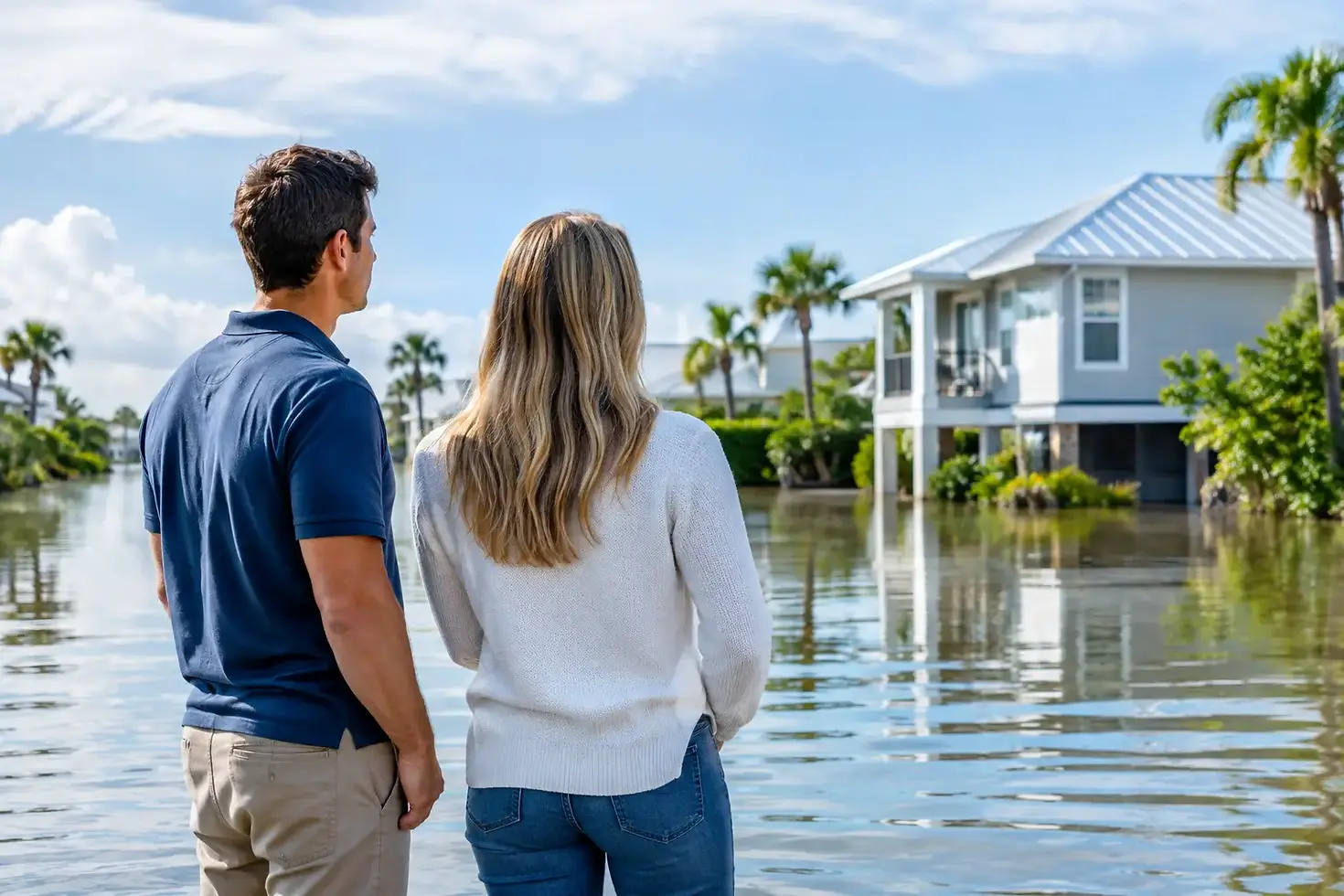
Who Needs Flood Insurance in Florida? A Clear Guide

A few inches of water can damage floors, appliances, furniture, and personal belongings far faster than most families expect. Who needs flood insurance? Florida homeowners, condo owners, and renters should all consider the answer carefully, especially because a standard home or renters policy typically does not cover flood damage.
Flood insurance is not only for homes directly on the coast or properties that have flooded before. Heavy rain, drainage problems, overflowing canals, storm surge, and rising water can affect neighborhoods well beyond the beach. The right coverage depends on your property, your loan, your belongings, and how much financial risk you are prepared to carry yourself.
Who Needs Flood Insurance in Florida?
Some Florida property owners are required to carry flood insurance. Others are not required to buy it, but may still have a strong reason to consider it.
If you have a mortgage from a federally regulated or federally insured lender and your home is located in a Special Flood Hazard Area, your lender will generally require flood insurance. These areas are often called high-risk flood zones on flood maps. The requirement can apply when you purchase the home, refinance, or when a lender later determines that flood coverage is needed during the life of the loan.
Your lender may require a certain amount of building coverage based on the outstanding loan balance, the building's insurable value, or program limits. The exact requirement varies, so review the lender's notice and your policy limits instead of assuming one amount fits every home.
But a mortgage requirement is not the same thing as a risk assessment. A home outside a high-risk zone can still flood. In fact, many flood losses happen in areas that are not designated as high risk. Flood maps are useful, but they do not guarantee that water will stay away from a particular street, driveway, or first-floor unit.
Homeowners: Protect the Structure and What Is Inside
Homeowners should look at two separate questions: what it would cost to repair the building, and what it would cost to replace what makes the house livable. Flood insurance may offer building coverage for items such as the foundation, electrical and plumbing systems, permanently installed flooring, cabinets, water heaters, and major appliances.
Personal property coverage can help with eligible belongings such as furniture, clothing, electronics, curtains, and certain appliances. Building and contents coverage are often selected separately, which matters for homeowners who have invested heavily in furnishings or home office equipment.
Do not assume that your regular home insurance policy fills this gap. Home insurance can cover many types of sudden damage, including certain water losses, but flood is usually excluded. In insurance terms, flooding generally involves water that inundates normally dry land and affects multiple properties or at least two acres of land. The source of the water matters.
For example, wind damage from a hurricane and flood damage caused by water entering afterward may be handled under different coverages. A roof damaged by wind is not the same claim as water rising from the street, canal, or coastal surge. Understanding that distinction before a storm is much easier than sorting it out after one.
Renters: Your Landlord's Policy Does Not Cover Your Belongings
Renters often believe the building owner's insurance will protect everything inside the apartment or rental home. Usually, it does not. The landlord's policy may insure the structure, but your furniture, clothes, electronics, kitchen items, and other belongings are your responsibility.
Renters flood insurance is generally focused on personal property. It can be especially valuable for first-floor apartments, homes near waterways, and rentals in areas with recurring heavy rainfall. Even renters on an upper floor can be affected when common areas, parking structures, storage spaces, or lower-level access points flood.
A practical way to evaluate the need is to make a quick inventory. Add up the cost to replace your bed, sofa, television, laptop, clothing, small appliances, and basic household items. The total can be much higher than expected. Then ask whether you could comfortably replace those items after a flood without insurance.
Condo Owners Need to Review the Association Policy
Condo insurance requires an extra layer of attention. The condominium association may carry flood insurance for the building or common areas, but that policy may not protect the interior of your unit or your personal property to the extent you expect.
Review the association documents and find out where its responsibility ends. Depending on the building's rules and insurance arrangement, you may need coverage for improvements inside your unit, such as flooring, cabinets, fixtures, or appliances, along with your personal belongings. A first-floor condo may face a different level of exposure than a unit several stories above ground, but location within the building is only one part of the picture.
When Flood Coverage Is Worth Considering
You do not need to live in a mapped high-risk zone to have a reason to request a quote. Flood coverage deserves attention if your property is near the coast, a canal, a lake, a retention pond, or a low-lying road. It can also make sense if your neighborhood has poor drainage, frequent standing water, or a history of street flooding after intense storms.
Consider it carefully if your home has a ground-level living area, a garage with valuable contents, or a first-floor rental unit. New construction is not automatically protected from flood risk either. Drainage systems can be overwhelmed, and nearby development can change how water moves through an area.
Florida's weather creates more than one flood scenario. A slow-moving tropical system can bring days of rain. A strong storm can push water inland. A localized downpour can overwhelm drainage in a short period of time. The question is not simply whether a major hurricane will hit your address. It is whether water could reach your property in a way that creates damage your current policies exclude.
What Flood Insurance May Not Cover
Flood policies are valuable, but they are not blank checks. Coverage limits, deductibles, exclusions, and policy terms all matter. In many cases, flood insurance does not cover temporary living expenses if you have to leave your home. Items outside the insured building, such as landscaping, patios, pools, fences, and certain outdoor property, may also have limited or no coverage.
Basements, enclosures, and areas below the lowest elevated floor can have special restrictions. Coverage for belongings kept in these spaces may be limited to specific items. Cash, paper records, precious metals, and some high-value property may not be covered or may require a different insurance solution.
This is why the lowest premium is not always the best choice. A lower premium may come with a higher deductible, lower limits, or fewer options for your belongings. On the other hand, buying more coverage than your property and budget justify may not be the right fit either. The goal is to understand the trade-off before you need to file a claim.
Flood Insurance Can Have a Waiting Period
Another reason not to wait until a storm is approaching: flood coverage may not take effect immediately. Many policies have a waiting period, although exceptions can apply in certain situations, such as a property closing or a change in flood map requirements. Private flood insurance policies may have different rules than policies offered through the National Flood Insurance Program.
If you are buying a home, changing lenders, moving into a rental, or reviewing your current protection, ask when the coverage would become effective. Waiting until watches, warnings, or heavy rain are already in the forecast can leave you with fewer options.
Questions to Ask Before You Choose a Policy
A useful flood insurance conversation should be specific to your home or rental. Ask whether the quote includes building coverage, contents coverage, or both. Confirm the deductible for each type of coverage, the policy limit, and whether replacement cost or actual cash value applies to personal belongings.
You should also ask whether your lender has coverage requirements, whether your condo association carries a master flood policy, and whether the policy meets those requirements. If you have upgraded cabinets, flooring, appliances, or electronics, mention them. Details help an agent recommend limits that better reflect your household.
For families who prefer to discuss coverage in Spanish or English, Andrea Salazar Personal Insurance Specialists can help make the conversation clear and practical. A quote is an opportunity to ask direct questions, compare options, and understand what is and is not protected.
Flood risk is personal. Take a look at where water collects near your home, what you would need to replace, and what your current policy excludes. That small review can give you a clearer path to protecting the place and belongings your family works hard for.


Comentarios